
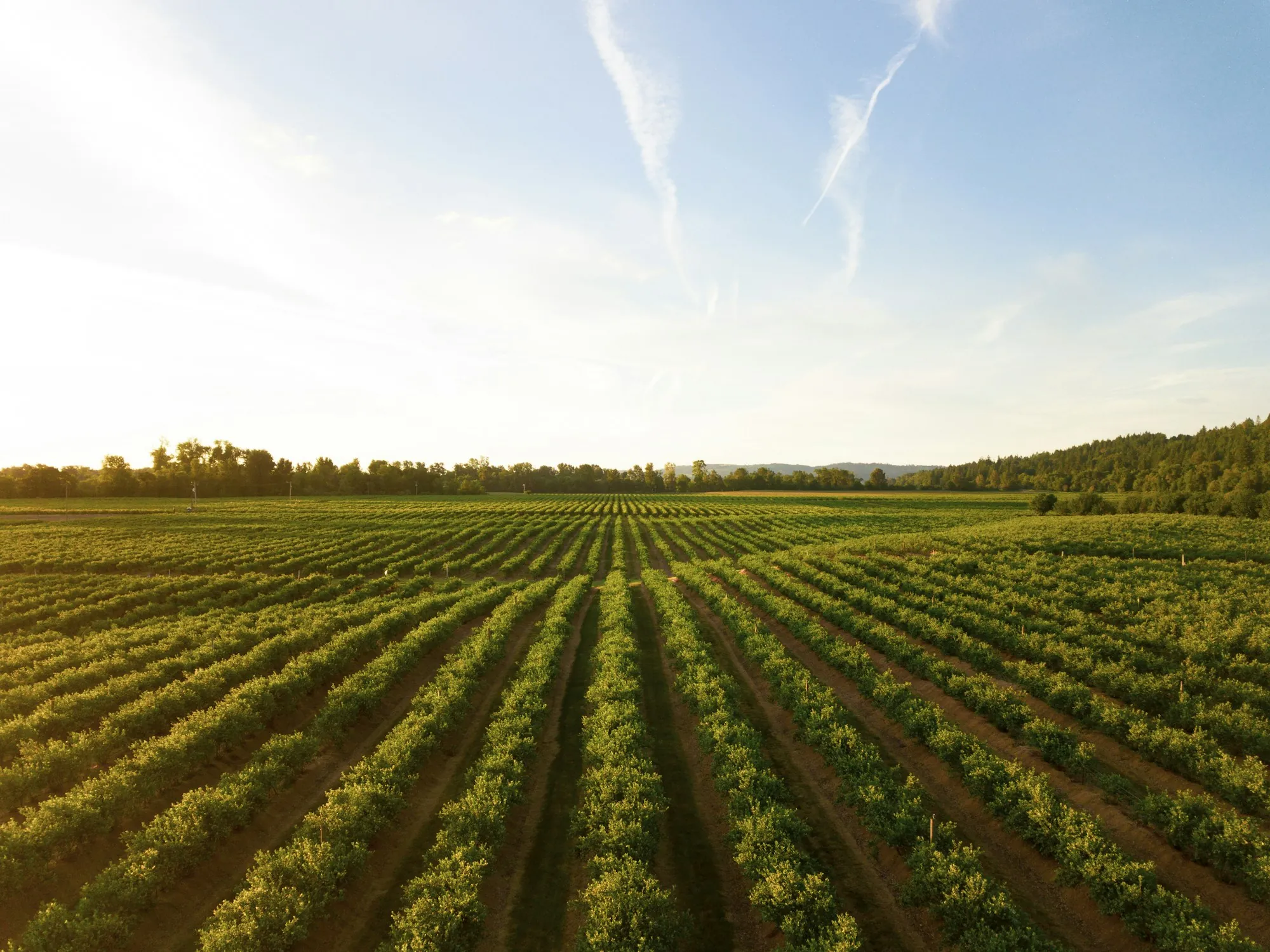
You found a block of open ground outside Earlimart, the price looks reasonable, and the listing notes that the parcel is under a Williamson Act contract. What does that actually change for you as the buyer? Quite a lot, as it turns out. The contract does not end at the sale. It transfers to you, along with its limits on how the land can be used and the lower property tax assessment that usually comes with it. Knowing what the Williamson Act means when you buy farmland is the difference between a good fit and a parcel that cannot do what you planned.
What Is the Williamson Act?
The Williamson Act, formally the California Land Conservation Act of 1965, is a voluntary program in which a landowner agrees to keep land in agriculture or compatible open-space use in exchange for a property tax assessment based on that actual use rather than its potential market value. The California Department of Conservation’s Williamson Act FAQ says nearly 16 million of the state’s 30 million acres of farm and ranch land are enrolled.
The contracts are not with the state. They are between the landowner and a city or county, and only land inside an agricultural preserve, an area the board of supervisors or city council designates by resolution, can be enrolled. Earlimart is an unincorporated community, so farm parcels around it fall under Tulare County’s program and its local rules rather than a city’s.
There are two contract types. A standard Williamson Act contract is the common one. A Farmland Security Zone contract is limited to higher-quality farmland, runs longer, offers a larger tax reduction and carries a higher cancellation fee.
Does the Contract Stay With the Land When It Sells?
Yes. The Department of Conservation states that both standard and Farmland Security Zone contracts are binding on all subsequent purchasers. Its Williamson Act questions and answers page adds that the contract remains on the property and its deed until it is ended through nonrenewal or cancellation.
For a buyer, that means you are stepping into the seller’s agreement with the county, not negotiating a new one. Whatever the contract and the preserve rules allow, you get. Whatever they prohibit, you inherit. A new owner cannot simply decide the contract no longer applies, and a change of ownership does not restart or erase it.
How Long Does a Williamson Act Contract Last?
A Williamson Act contract runs on a rolling term that renews itself every year. The Department of Conservation describes standard contracts as ten-year rolling terms and Farmland Security Zone contracts as twenty-year terms, while noting that the statutory minimums are nine and eighteen years and that some jurisdictions use those shorter terms.
Because the term rolls, a contract that was signed decades ago still has its full term ahead of it on every anniversary. There is no point at which it quietly expires on its own. The only way to start a clock toward expiration is a notice of nonrenewal, covered below. That is why the single most useful thing to learn about a contracted parcel is whether a nonrenewal has already been filed, and if so, when.
How Does a Contract Affect Property Taxes?
Contracted land is assessed on its agricultural use rather than its full market value, which often lowers the annual tax bill. The Department of Conservation’s FAQ cautions that the result is property-specific and that not every contracted parcel ends up with a larger break than it would otherwise receive. It cites a 1989 study that estimated savings for agricultural landowners of 20 to 75 percent in property tax each year.
For a buyer, the practical step is to look at the parcel’s actual tax history with the Tulare County assessor rather than assuming a figure. If a nonrenewal has been filed, ask how the assessment is expected to change over the remaining years, because the bill the seller paid may not be the bill you pay later. A tax advisor can explain how the rules apply to the specific parcel.
What Can You Do on Contracted Land?
Contracted land is limited to agricultural and compatible uses as defined by the local preserve rules. The Williamson Act lists certain uses as compatible unless a county decides otherwise, including agricultural labor housing, water facilities and electrical facilities, and the Department notes that commercial agricultural use is generally permitted in any preserve.
What the state law does not do is spell out every detail for every parcel. Each county adopts its own rules on allowable uses, acreage minimums and enforcement. Before you buy, compare your plans against those rules. Planting a new orchard or vineyard is the kind of use the program is built around. Splitting off lots, adding a non-farm business or putting up large commercial buildings is a different matter, and the Department’s Q&A notes that unpermitted commercial or industrial buildings over 2,500 square feet can be treated as a material breach.
| Your plan for the land | How a contract is likely to affect it |
|---|---|
| Keep farming crops or grazing | Generally consistent with the contract |
| Replant to a different crop | Usually fine as commercial agriculture |
| Add farmworker housing or a well | Often listed as compatible, subject to county rules |
| Subdivide or develop for homes | Typically restricted while the contract is in force |
| Large non-farm commercial building | May be treated as a breach |
Water Matters Too
Contract status is only half the picture around Earlimart. Much of the farm ground nearby lies within the Delano-Earlimart Irrigation District, which a state groundwater filing describes as formed in 1938 to deliver surface water and covering about 56,500 acres, mostly in the Tule Subbasin. A contract keeps land in agriculture, but it does not guarantee water to farm it, so district service and well records deserve the same scrutiny as the contract itself.
What Should You Ask Before Making an Offer?
The right questions about a contracted parcel are the ones that tie the contract to your plans. Ask them early, and get the answers in writing during your contingency period rather than after it ends.
- Which contract type is it? A standard contract and a Farmland Security Zone contract differ in term length, tax treatment and cancellation cost.
- Has a notice of nonrenewal been filed? If so, find out the date, because it sets when the contract will expire and how the taxes may change along the way.
- Is the whole parcel enrolled, or only part of it? A homesite, a shop area or a road frontage strip may be treated differently from the farmed acreage.
- What does the county’s preserve allow? Get the current rules that apply to this preserve, not a summary from a neighbor.
- Are there any open compliance issues? Structures or uses that do not fit the contract can become the new owner’s problem.
Working through these points is part of how agricultural real estate purchases in the Earlimart area are evaluated, alongside water, soil and access. If you are newer to buying rural land, the buyer representation page explains how an offer and its contingencies come together, and the homepage covers the other property types Real Estate Agent Earlimart works with across southern Tulare County.
FAQ: Buying Williamson Act Farmland
How do I find out whether a parcel is under contract? Start with the preliminary title report and the county’s records, then confirm with Tulare County planning staff. The Department of Conservation also publishes a Williamson Act Enrollment Finder map from its program page that shows enrolled land statewide.
Can I get out of the contract after I buy? The usual route is a notice of nonrenewal, which either the owner or the county can file. For a standard contract it starts a nine-year countdown to expiration, nineteen years for a Farmland Security Zone contract, and there is no fee. Cancellation is a separate, limited path that requires county findings after a public hearing.
What does cancellation cost? The landowner pays a fee equal to 12.5 percent of the land’s current fair market value for a standard contract, or 25 percent for a Farmland Security Zone contract, based on the county assessor’s determination. The Department notes that another available use for the land is not, by itself, a sufficient reason to cancel.
Should a contract change what I offer? It can. A parcel you plan to farm long term may suit a contract well, while a parcel you hoped to split or develop may not. Review the contract and the county rules with a real estate attorney and a tax advisor before removing contingencies.
Sources
- California Department of Conservation, Williamson Act FAQ (2024)
- California Department of Conservation, Land Conservation (Williamson) Act Questions and Answers
- California Department of Conservation, Williamson Act Program
- California DWR SGMA Portal, Delano-Earlimart Irrigation District basin boundary request